Nobody explains startup funding stages in plain language — most articles just throw around terms like “pre-seed” and “Series A” and assume you already know what they mean. Let’s fix that.
Pre-Seed: Building With Your Own Money
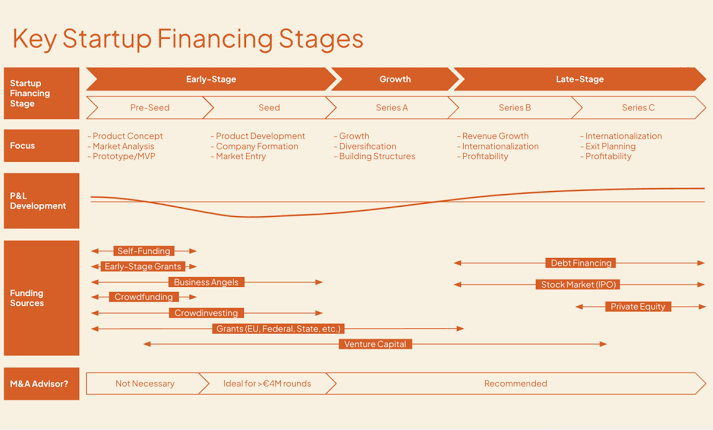
This is the stage most founders never talk about publicly. It’s your savings, maybe a loan from family, spent on building a rough version of the product. There’s usually no formal investor involved yet.
Seed Funding: Proving the Idea Can Work
Quick answer: seed funding is the first real external investment a startup raises, typically used to build a working product and get initial paying customers, usually ranging from a few lakhs to a few crores depending on the sector.
Seed investors — angels, early-stage funds, sometimes accelerators — are betting on the founder and the problem more than on hard numbers, because there usually aren’t many numbers yet.
What Investors Actually Look For at Seed Stage
- A founder who understands the problem deeply, not just superficially
- Early signs of customer interest, even if small
- A believable, if rough, plan for how the business makes money later
Series A: When Traction Becomes the Story
By the time a startup raises Series A, the conversation changes completely. Investors now want to see actual traction — revenue growth, user retention, repeat purchases — not just a promising idea.
I’ve noticed founders often underestimate how much harder Series A conversations are compared to seed. At seed, you’re selling a vision. At Series A, you’re defending a spreadsheet.
Typical Series A Requirements
- Consistent month-on-month growth, usually over a meaningful stretch of time
- A clear customer acquisition cost that doesn’t eat the entire margin
- A believable path to the next 10x in growth, not just the current size
How Startup Funding Stages Differ by Sector
A SaaS startup and a D2C food brand hit these startup funding stages at very different speeds and valuations. SaaS investors often care more about recurring revenue metrics; consumer brands get judged more on repeat purchase rates and unit margins.
Should Every Startup Raise Funding?
Not necessarily. Picture a small B2B software startup based out of Jaipur that stayed bootstrapped through its first two years — no seed round at all — because its founders preferred to keep full control while revenue slowly built up. It’s a valid path, just a slower and riskier one financially.
[link to related guide about bootstrapping a startup without investors here]
Red Flags Investors Watch for at Every Stage
- Founders who can’t explain their own numbers clearly
- Revenue that’s growing but margins that are shrinking
- No clear answer for “why now” — why this idea works in 2026 specifically
[Suggested image alt text: “startup founder pitching funding stages to investors in a meeting”]
FAQ
What’s the difference between pre-seed and seed funding? Pre-seed is usually self-funded or from friends and family, while seed involves formal outside investors and larger amounts.
How much equity do founders typically give up at seed stage? It varies widely, but many seed rounds involve giving up somewhere between 10-20% of the company.
Do all startups need to go through every funding stage? No. Some stay bootstrapped, some skip straight to larger rounds if traction is unusually strong.
What metrics matter most for Series A? Consistent growth, retention, and a clear, defensible customer acquisition cost.
Can a startup raise funding without any revenue? Yes, at the pre-seed or seed stage, though it usually requires a strong team and a compelling early product.
Conclusion
Understanding startup funding stages isn’t just useful for founders chasing investment — it helps you plan realistically, whether you’re raising money or deliberately avoiding it. Each stage demands a different kind of proof, and the sooner you know what investors expect at each one, the less time you’ll waste pitching too early or too late.