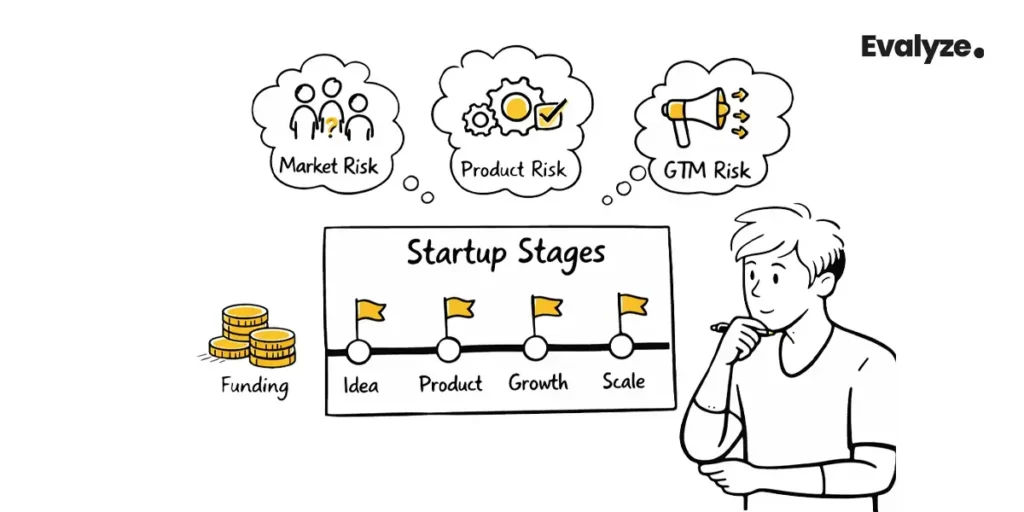
Most growth stories online skip the messy middle part. This startup case study focuses specifically on that stretch — the unglamorous months between a decent early idea and genuinely meaningful revenue.
The Starting Point
The business in question, a home organization products brand based in Jaipur, started with a single founder, minimal savings, and one product line sold entirely through Instagram. Monthly revenue in the first three months barely covered basic costs.
Quick answer: this startup case study shows that scaling to six figures wasn’t driven by one big breakthrough moment, but by a series of small, consistent operational improvements compounding steadily over roughly eighteen months.
Month 1-4: Finding the Real Customer
Early sales came from friends and casual followers, not genuine market demand. The founder spent this period actually talking to customers directly, discovering the real audience skewed toward working professionals wanting quick home organization solutions, not the broader audience originally assumed.
Month 5-9: Fixing the Product-Market Mismatch
- Narrowed the product line from twelve items down to four best-performing ones
- Adjusted pricing after realizing the original prices were actually too low to sustain healthy margins
- Improved packaging based directly on repeated customer feedback about damage during shipping
Month 10-14: Building Repeatable Marketing
I’ve noticed this stage is where many startups either find their footing or quietly stall. This particular founder found that short, casual videos showing real organization transformations consistently outperformed polished product photography, and doubled down accordingly.
Month 15-18: Scaling Operations Carefully
- Hired a part-time assistant specifically for order fulfillment, freeing founder time for marketing and product development
- Negotiated better rates with a packaging supplier once order volume justified it
- Introduced a simple customer loyalty program that noticeably increased repeat purchase rates
[link to related guide about building repeat customer loyalty programs here]
What Actually Drove the Six-Figure Milestone
Contrary to what you might expect, there was no single viral moment. Revenue grew steadily through consistent content, a narrowed and improved product line, and operational fixes that compounded month over month rather than a dramatic single breakthrough.
[Suggested image alt text: “small startup founder reviewing revenue growth chart”]
FAQ
How long did it realistically take this startup to reach six figures? Roughly eighteen months of consistent, incremental improvement, not a sudden overnight jump.
What was the biggest turning point in this startup case study? Narrowing the product line and adjusting pricing after identifying the real target customer more precisely.
Did this startup rely on paid advertising to scale? Minimally — most growth came from consistent organic content rather than heavy ad spend.
What role did customer feedback play in the growth? A significant one — packaging and product decisions were directly shaped by repeated, specific customer complaints and suggestions.
Is this kind of growth realistic for most small startups? It’s realistic with consistent effort, though timelines vary significantly depending on niche, competition, and available resources.
Conclusion
This startup case study shows that meaningful scaling usually comes from steady, unglamorous improvements — understanding your real customer, fixing product mismatches, and building repeatable marketing — rather than a single dramatic breakthrough. It’s a slower, more realistic picture of growth than most success stories tend to portray.